
British Airways has officially confirmed that it will be reducing capacity to India for the Summer 2010 IATA season i.e. from March 29th 2010. The main highlights are as follows:
BLR - capacity reduced from a daily B 744 to daily B 772ER.
HYD - capacity reduced from 5 weekly B 772ERs to 5 weekly B 763ERs.
BOM - capacity reduced from daily B 744 + daily B 772ERs to double daily B 772ERs only.
Wednesday, December 2, 2009
British Airways
Austrian Airlines

Austrian Airlines has officially revealed major changes to its medium haul and long haul route network for the Summer 2010 IATA season. The main highlights are as follows:
NRT - frequencies increased from 6 weekly to daily nonstop flights using a B 772ER.
EBL - frequencies increased from 5 weekly to daily flights.
TLV - capacity increased from double daily A 321s to double daily B 763ERs.
DAM - frequencies increased from daily to 10 times per week using an A 320.
CAI - capacity increased from daily A 319 to daily A 321.
AMM - frequencies increased from 3 to 6 times per week using an A 320.
TSE - frequencies increased from 3 to 4 times per week using an A 320.
YYZ - will maintain daily nonstop flights using a B 763ER.A 330-200HGW idea
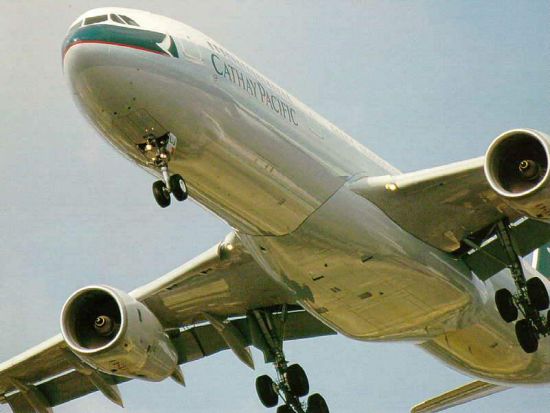
During the weekend whilst doing some research, I came across an interesting aircraft called the Airbus A 330-200HGW (High Gross Weight) and its performance capabilities. It has already gotten its first launch customer i.e. Korean Air that has ordered 6 of the type in Feb 2009. Airbus has projected that this aircraft will be a direct competitor to the Boeing 787-800 and is targeting orders from airlines that have been severely effected by its delivery delays. A key component to Airbus's advantage with this aircraft is that any airline that orders it will take delivery of it within 18 months time which is highly attractive.
According to stats available, the A 332HGW can fly nonstop with a full payload of passengers + cargo up to a range of 7000NM (12,800KM). This means that the aircraft can easily fly from the GCC nonstop to PER/ORD, from DEL to SYD/MEL, from ICN to IAH/ORD and from EZE to FRA/MXP/CDG. Hence the purpose of this part of the newsletter is meant to suggest to few airlines why they should seriously consider the A 332HGW for quick delivery within 18 months time and on what routes they would be best served to be utilized on.
For all airlines, the configuration should be 248 seats max in a 2 class configuration i.e. 24 J (2-2-2) + 224 Y (2-4-2). The airlines that should seriously consider ordering the A 332HGW are as follows:
Kuwait Airways; it can replace its entire A 343, AB6 and A 310 fleet and be used also for:
KWI-MNL nonstop which would replace current service flown via BKK
launch KWI-IAD nonstop
launch KWI-YYZ nonstop (for which KU has authority to do so twice a week only though according to 2007 bilateral).
launch KWI-PEK nonstop
Egypt Air; A 332HGWs can be used to:
launch CAI-ORD nonstop.
launch CAI-IAH nonstop.
replace A 342s on NRT sector.
replace B 777 to YUL in the summer.
Royal Jordanian:
A 332HGWs can easily replace entire A 342 fleet and be used to operate all current USA-AMMAN nonstop flights along with YUL and upcoming AMM-HKG nonstop. FYI, A 332HGW pax capacity is same as A 342.
Air India:
launch DEL-SYD/MEL nonstop
launch BOM-JNB-DUR-BOM
replace A 310 on BOM-NBO sector.
replace the B 77L on CDG and NRT routes.
launch HYD-FRA-IAD 3 weekly
launch DEL-ATQ-BHX 4 weekly
launch MAA-FRA-IAH 4 weekly
Ethiopian Airlines:
launch ADD-PEK nonstop
launch ADD-BKK nonstop
*both these routes were ear marked for the B 787
Sri Lankan Airlines:
Can be used to fully replace its entire A 343 and A 332 fleet as the A 332HGW can fly to LHR easily nonstop from CMB which is UL's flagship route. It can also be used to launch new nonstop flights from CMB to Australia and replace older aircraft to NRT.
South African Airways:
Replace all routes currently operated by the inefficient A 342 and replace the A 343 on all Latin American and European bound flights.
Gulf Air:
Out of the newly placed order for 20 A 333s, 8 should be converted to A 332HGWs to fly to MNL (2), Japan (NRT only-2) and USA (ORD/EWR-4) in the future.
Etihad Airways; the routes suited for it in the future are as follows:
AUH-PER
AUH-IAD
Thai Airways

Thai Airways will be reducing capacity to Dubai from Dec 1st 2009 onwards from a daily A 333 to a daily A 346. This means a reduction of 32 seats per day on the DXB BKK DXB route. FYI, TG's 2 class A 333s seat 299 pax in a 2 class configuration (J and Y) where as TG 's 3 class A 346s seat 267 pax. However, their in flight product on this route will get a big face lift as their A 346 fleet has a first class cabin (which their A 333s dont) in addition to TG's new Y and J class cabin product.
TG too confirmed that it will be increasing its flights to Singapore from Dec 15th 2009 with the addition of a 4th daily nonstop flight. TG will be using an A 333 for this additional daily flight where as its other 3 daily flights are operated by a mixture of A 333s and B 772As.
Thai Airways has officially confirmed that it will be reducing frequencies to BOM-Mumbai from December 2009. Currently, operations were listed as being 13 weekly using B 744s for all flights, however these will be reduced to 11 weekly services using an A 333 four times per week + a B 772A on a daily basis.
Etihad Airways

Etihad Airways has officially announced that it will be launching flights to Nagoya and Tokyo Narita from Feb 1st 2010 onwards. Flights to NGO will be flown via Beijing four times a week using a 2 class configured A 332 where as the fifth weekly flight will be flown as AUH-NGO-NRT-AUH using a 3 class configured A 332. With regards to its NRT bound flights, they will be flown 5 times a week from AUH (4 nonstop + 1 via NGO) using a 3 class configured A 332.
EY has too confirmed that for the entire IATA Summer 2010 season, it will be reducing capacity to CDG-Paris. Currently, it operated to CDG 10 times per week nonstop using an A 332 seven times per week + an A 346 three times per week. However from March 28th 2010, all 10 weekly flights will be flown using a 3 class configured A 332 seating 216 passengers.
Etihad Airways has officially announced on the GDS that it will be increasing its frequencies to FRA-Frankfurt in a gradual manner from Dec 10th 2009 onwards. Currently, EY operates 10 weekly nonstop flights to FRA, however from Dec 10th, these will be increased to 13 weekly nonstop using a three class configured A 332. Thereafter, a further increase will take place from 13 weekly to double daily effective March 28th 2010 also using 3 class configured A 332s. EY too announced that in leiu of high demand, it will be further increasing its flights to HYD-Hyderabad, India from Jan 1st 2010 onwards from 4 weekly to daily nonstop flights using an A 320.
EVA Air

EVA AIR of Taiwan has officially announced that it will be increasing frequencies on its popular London Heathrow route that is flown via Bangkok from Taipei with full 5th freedom rights available to the carrier on the BKK-LHR-BKK sector. Flights will be increased from 6 weekly to daily services effective Jan 25th 2010 using a Boeing 777-300ER.
Air India

Air India's management has officially confirmed that due to cost cutting measures being implemented, it will be suspending all of its flights to NBO-Nairobi, Kenya from January 20th 2010. Currently, the flights are flown nonstop from BOM to NBO using an old Airbus A 310-300. In addition, management has confirmed to the media that one of its flagship routes i.e. Mumbai
Jet Airways India

Jet Airways of India has officially confirmed that it will be increasing capacity on its popular EWR-Newark route between Nov 20th 2009 and Jan 16th 2010. Current daily services operated via BRU using an A 332 will be replaced by the same daily flights but with using the larger 3 class configured Boeing 777-300ER to cater for higher peak season travel demand to/from India in Dec-Jan. In addition, 9W too has confirmed that it will be launching new 6 weekly nonstop flights from Mumbai to Kathmandu, Nepal using a Boeing 737-800 effective Dec 2nd 2009. The flight schedule is as follows:
9W 266 Dep BOM 0830 Arr KTM 1115
9W 265 Dep KTM 1245 Arr BOM 1530
Hainan Airlines

Hainan Airlines of China has officially announced that it will be launching 2 new weekly nonstop flights to KRT-Khartoum, Sudan from Nov 20th 2009 onwards. HU will be operating its flight from its PEK-Beijing hub using its flagship Airbus A 340-600 aircraft on TUE and FRI. The flight schedule is as follows:
HU 7915 Dep PEK 0150 Arr KRT 0940
HU 7916 Dep KRT 1350 Arr PEK 0500+1
These flights are expected to negatively impact the market share of EK, EY, ET, QR, MS and GF on the China-KRT sector where there is considerable amount of travel done due to the huge Chinese foreign investment in the Sudanese economy.
Turkish Airlines

Turkish Airlines has officially confirmed that it will be increasing its flights to New York JFK for the IATA Summer 2010 season from daily to 9 weekly nonstop flights. TK will be using a B 773ER daily + an A 332 twice a week to operate this flights next summer.
Saudia Airlines
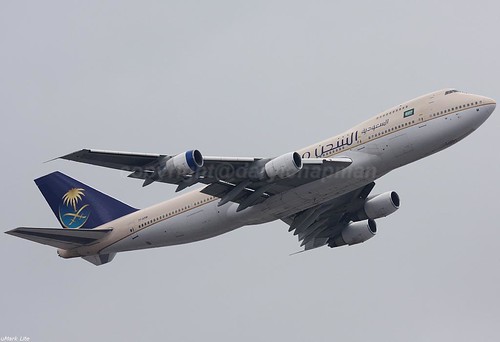
Saudi Arabian Airlines has officially announced that it will be reducing capacity on all of its European bound flights from January 1st 2010 onwards as the carrier looks to adjust capacity with forecasted demand for its flights. Currently, all of its flights to Milan, Paris, Rome, Madrid, Geneva and Frankfurt are operated with Boeing 777-200s. However, all these destinations will see capacity reduced two fold as SV will be henceforth utilizing an Airbus A 320 to operate to all of these mainland EU cities. The only route in Europe that will continue to see its B 777s being used on is London Heathrow.
United Airlines

United Airlines has officially announced major plans concerning its long haul expansion which will come into effect from the start of the Summer 2010 IATA season. The main highlights are as follows:
ORD/BRU - new daily nonstop flights to be launched using a B 763ER effective March 28th.
IAD/ACC/LOS - new daily flights to be launched using a B 763ER.
IAD/KWI/BAH - new daily flights to BAH will be launched as an extension of the KWI flight using a B 772ER effective April 18th.
Egypt Air

Egypt Air has officially confirmed on the GDS that it will be suspending its summer seasonal flights to YUL-Montreal as they will be not be renewed for the Summer 2010 season. Usually, it operates 3 weekly Boeing 767-300ERs on the CAI-YUL-CAI route.
On the other hand, MS has officially announced that it will be increasing its flights to NRT-Tokyo in a major manner from May 31st 2010 onwards. Currently, it operates 3 weekly nonstop flights using an aging A 340-200, however from May 31st 2010 onwards, frequencies will be increased two fold to 6 weekly nonstop flights using its brand new Boeing 777-300ERs.
Malaysia Airlines

Malaysian Airlines has released details of its new flights to Lahore, Pakistan which will be flown from April 2008 from KUL via KHI. Flights will be flown 3 times a week using an A 330-300. The flight timings are as follows :
Flights operate on MON/THU/SAT
MH 170 Dep KUL 15:20 Arr KHI 18:15
MH 171 Dep KHI 19:30 Arr LHE 21:10
MH 171 Dep LHE 22:10 Arr KUL 06:50 +1
American Airlines pulls NY flights to Stansted
 American Airlines has announced it will cancel its short-lived route from New York to Stansted Airport, according to reports.
Due to the global credit crunch and rising fuel costs, the Texas based airline has decided to stop the flights as part of plans to cut costs and downsize.
"This decision is among a number of first-round reductions to American's flight schedule as part of the airline's previously announced plans to reduce capacity in an effort to significantly reduce costs and create a more sustainable supply-and-demand balance in the marketplace," said the airline.
American Airlines will withdraw the route from JFK airport to Stansted Airport on July 2nd, less than a year after it launched the schedule last October in a bid to increase its share of the lucrative trans-Atlantic business market.
Around 45 mainline aircrafts and forty regional jets will be retired to accommodate the airlines commitment to reduce overall capacity.
American Airlines will continue to offer its full schedule of flights between JFK and Heathrow Airport, according to the airline.
American Airlines


- American Airlines (AMR) today announced that it will compete with Delta in offering wireless internet for domestic flights. American is No. 2 in the world in passenger traffic, since Delta acquired Northwest Airlines last year. Dan Garton, American’s executive vice president said they will suit up 300 planes used primarily in the U.S. by the end of the year.
- Currently Southwest Airlines (LUV) and JetBlue (JBLU) are experimenting with it on planes flying inside the USA. Average pricing goes as follows: Laptop users pay $12.95 on flights longer than three hours, and $9.95 on shorter ones. Travelers using handheld devices, such as smartphones and PDAs, will pay $7.95 no matter the length of the flight.
- It will be interesting to see how flight attendants will be dealing with VoIP calls, since cellphone service is still not going to be allowed on any planes (and hopefully not anytime soon), but services like Skype, gChat and others will voice capabilities have not been officially banned….yet
Sponsored Links Thai Airways International Public Company Limited
Thai Airways International Public Company Limited is the national air carrier of Thailand, operating out of Suvarnabhumi Airport, and is a founding member of the Star Alliance network. It is headquartered in Bangkok. Thai Airways International is a major shareholder which hold 39% shares of Nok Air – a low-cost Bangkok based carrier. The airline also operates one of the longest non-stop commercial flights, including the 18 hours non-stop flight from Bangkok to Los Angeles.

Skytrax awarded Thai Airways International ‘Worlds Best Cabin Staff and The Best Airline in the World’ in 2006, while placing second in the ‘Airline of the Year’ category in 2007. Thai Airways International’s first class lounge at Suvarnabhumi Airport was awarded by Skytrax as the world’s best first class lounge again in 2009
THAI started as Thai Airways International, a joint venture between Scandinavian Airlines System or SAS which initially held a 30% share capital of 2 million baht, along with a domestic carrier, Thai Airways Company. SAS helped THAI in managing, marketing and operating its business.
Download Thai Airways International Company Vector Logo (EPS Format)
Delta Airlines
 A Delta airlines customer is reflected in a sign on a baggage check in kiosk October 22, 2009 at San Francisco International Airport in San Francisco, California. Delta Airlines, the biggest airline in the world, reported a third quarter loss of $161 million, or 19 cents a share compared to a loss of $50 million or 13 cents a share one year ago.
World's Biggest Airport


Beijing’s new international terminal is the world’s largest and most advanced airport building - not only technologically, but also in terms of passenger experience, operational efficiency and sustainability. Completed as the gateway to the city for athletes participating in the twenty-ninth Olympiad, it is designed to be welcoming and uplifting. A symbol of place, its soaring aerodynamic roof and dragon-like form celebrate the thrill and poetry of flight and evoke traditional Chinese colours and symbols.
Located between the existing eastern runway and the future third runway, the terminal building and Ground Transportation Centre (GTC) enclose a floor area of 1.3 million square metres and will accommodate an estimated 50 million passengers per annum by 2020.
Although conceived on an unprecedented scale, the building’s design expands on the new airport paradigm created by Stansted and Chek Lap Kok. Designed for maximum flexibility to cope with the unpredictable nature of the aviation industry, like its predecessors, it aims to resolve the complexities of modern air travel, combining spatial clarity with high service standards.
Public transport connections are fully integrated, walking distances for passengers are short, with few level changes, and transfer times between flights are minimised. Like Chek Lap Kok, the terminal is open to views to the outside and planned under a single unifying roof canopy, whose linear skylights are both an aid to orientation and sources of daylight - the colour cast changing from red to yellow as passengers progress through the building.
The terminal building is one of the world’s most sustainable, incorporating a range of passive environmental design concepts, such as the south-east orientated skylights, which maximise heat gain from the early morning sun, and an integrated environment-control system that minimises energy consumption. In construction terms, its design optimised the performance of materials selected on the basis of local availability, functionality, application of local skills, and low cost procurement. Remarkably, it was designed and built in just four years.
The new terminal, almost 20-per-cent bigger than all five terminals of London's Heathrow Airport combined, features an ultra-modern baggage system and a Canadian-designed shuttle train to help people navigate its vast interior.
The $3.75-billion terminal, one of the most prestigious projects of the Olympic construction boom in Beijing, was built by 50,000 workers who toiled on shifts around the clock. It took only four years to finish the terminal, compared with 20 years for the fifth terminal at Heathrow.
As an interpretation of traditional chinese culture the roof of the airport has a dragon-like form. According to Norman Foster [...] this is a building borne of its context. It communicates a uniquely Chinese sense of place and will be a true gateway to the nation. This is expressed in its dragon-like form and the drama of the soaring roof that is a blaze of ‘traditional’ Chinese colours – imperial reds merge into golden yellows. As you proceed along the central axis, view of the red columns stretching ahead into the far distance evokes images of a Chinese temple.
Beijing, of course, benefited from the police-state powers of the Chinese government, which demolished 10 villages to make room for the new terminal.
The statistics of the new terminal are stunning. The building has 64 restaurants, 84 retail shops, 175 escalators, 173 elevators, 437 moving sidewalks, nearly 300 check-in counters, and a state-of-the-art baggage-handling system that can move 20,000 pieces of luggage at speeds of up to 10 metres a second on 50 kilometres of conveyor belts. The construction required 1.8 million cubic metres of concrete and 500,000 tonnes of steel.
China is planning to have 239 airports by 2020, with 13 of them expected to handle 30 million passengers a year.
Thirty years after economic reforms began, this country has built a series of superstructures that almost seem intended more for the Guinness Book of World Records than cityscapes.
China is home, for instance, to the world's largest shopping mall (the 650,000-square-meter, or seven-million-square-foot, South China Mall); the longest sea-crossing bridge (stretching 36 kilometers, or 22 miles, over part of the East China Sea); the largest hydroelectric dam (the massive Three Gorges project); and the highest railroad (an engineering marvel that crosses the Tibetan permafrost almost 5,000 meters above sea level).
Late last year, Beijing opened what may be the world's largest concert hall, the National Center for the Performing Arts, a $400 million opera house and theater facility twice as big as the Kennedy Center in Washington. Nicknamed The Egg, its titanium dome rises above a wide pool of water.
Beijing International Airport Project description
Located between the existing eastern runway and the future third runway, Terminal 3 and the Ground Transportation Centre (GTC) together enclose a floor area of approximately 1.3 million m2, mostly under one roof. The first building to break the one million square meter barrier, it will accommodate an estimated 50 million passengers per annum by 2020.

Although conceived on an unprecedented scale, the building’s design aims to resolve the complexities of modern air travel, combining spatial clarity with high service standards. It will be friendly and uplifting for the passenger as well as easy to navigate. Comprising three connected, light-filled volumes – T3A, B and C – the simple, symmetrical diagram fans out at either end to accommodate the arrivals and departure halls for T3A (processing terminal and domestic gates) and T3B (international gates). The satellite T3C (domestic gates) occupies the centre of the diagram. This arrangement is an efficient means of maximising the perimeter, so increasing the capacity for aircraft stands, while maintaining a highly compact and sustainable footprint.

Although the length from north to south is three and a quarter kilometres, the visual links between the three elements are maintained by strong sight lines as well as visual connections between the lower level and an open mezzanine level above. All spaces are naturally lit and the generous glazing and skylights maintain a link with the outside and its changing sky. Views along the central axis are marked by the distinctive red columns, which continue along the external edges of the building into the distance, evocative of traditional Chinese temples.

The embracing curved cantilever of the terminal greets passengers arriving by road or from the GTC in a single welcoming gesture. Departures and arrivals are on separate levels. The traditional airport diagram has been inverted at T3B, with arrivals on the upper level, to allow visitors to Beijing to experience the thrill of this dramatic space from the best vantage point.

The single unifying roof canopy is perforated with skylights to aid orientation and bring daylight deep into the building. The colour palette moves through 16 tones from red at the entrance at T3A through to orange and finally yellow at the far end of T3B. This establishes a subtle zoning system that breaks down the scale of the building and enables easy wayfinding. This palette is also applied north to south in the ceiling above the arrivals and departures halls, heightening the sense of curvature in the roof plane.
Connections between T3A and T3B take place on a high speed automated people mover (APM) which travels at up to 80kph, with a journey time of just two minutes. The APM is easily accessed from the main departure level and set within a landscaped ‘green’ cutting, exposed to daylight and views up and through the building, all of which helps to maintain a sense of orientation.
Connections between T3A and T3B take place on a high speed automated people mover (APM) which travels at up to 80kph, with a journey time of just two minutes. The APM is easily accessed from the main departure level and set within a landscaped ‘green’ cutting, exposed to daylight and views up and through the building, all of which helps to maintain a sense of orientation.

The roof is a steel space frame with triangular roof lights and coloured metal decking. It curves, rising at the midpoint to create a dramatic central cathedral-like space, and tapering towards the edges of the building to provide more intimate areas as passengers travel towards the gates and the aircraft piers. The trusses that support the glazing echo the changing colour system in the roof – shifting from red to orange to yellow. The high transparency of the curtain walling is made possible by extra large mullions, which are generously spaced to allow larger spans of suspended glazing.
The terminal building is one of the world’s most sustainable, incorporating a range of passive environmental design concepts, such as the south-east orientated skylights, which maximise heat gain from the early morning sun, and an integrated environment-control system that minimises energy consumption. Rather than the sprawl of many separate buildings, it uses less land by bringing everything closer together for ease of communication in one efficient structure, yet it is still 17% bigger than the combined floorspace of all of Heathrow’s terminals 1, 2, 3, 4 and the new Terminal 5. In construction terms, its design optimised the performance of materials selected on the basis of local availability, functionality, application of local skills, and low cost procurement.
The terminal building is one of the world’s most sustainable, incorporating a range of passive environmental design concepts, such as the south-east orientated skylights, which maximise heat gain from the early morning sun, and an integrated environment-control system that minimises energy consumption. Rather than the sprawl of many separate buildings, it uses less land by bringing everything closer together for ease of communication in one efficient structure, yet it is still 17% bigger than the combined floorspace of all of Heathrow’s terminals 1, 2, 3, 4 and the new Terminal 5. In construction terms, its design optimised the performance of materials selected on the basis of local availability, functionality, application of local skills, and low cost procurement.


Light-Bathed Roof
Terminal 3's curved roof contains thousands of skylights. Their orientation to the southeast is intended to maximize the heat gain from the early morning sun, helping to reduce the amount of energy expended by the structure for heating. The golden tint, meanwhile, is meant to evoke the colors of Beijing's Forbidden City, the Ming Dynasty-era imperial palace at the city's center.

Vast Capacity
T3 will in effect double the Beijing Capital International Airport's capacity. By 2015, officials expect the newly enlarged facility to accommodate some 580,000 flights a year, outpacing even Europe's busiest airport, London Heathrow, which churns through some 475,000 flights annually.


Check-In
Terminal 3's nearly 300 check-in desks should be able to process up to 7,000 international passengers per hour.


Cathedral Ceilings
The roof rises at its midpoint to create a dramatic cathedral-like space that has become common in other high-profile airport designs, from San Francisco to London. What separates Beijing's Terminal 3 from other mega-projects, however, is its sheer scale: the roof alone has an area of nearly 4 million square feet.

Baggage System
Despite the airport's scale-which includes 30 miles of high-speed conveyor belts-the estimated time for bags to reach carousels is just 10 minutes.


Etihad Airways

Etihad Airways jumps into the top ten league for the first time. Etihad Airways was set up as the National Airline of the United Arab Emirates in July 2003 by a Royal decree issued by Sheikh Khalifa bin Zayed Al Nahyan, then the Crown Prince of Abu Dhabi. Dr Sheikh Ahmed bin Saif Al Nahyan was appointed Chairman of the airline.
The Abu Dhabi based Etihad Airways is expanding services at a fast pace. On November 12, 2003, the airline started commercial operations with the launch of a service to Beirut. Soon the company started adding one new route a month. By June 2006, it started flying to over 30 destinations.
By 2010, the company plans to fly to 70 destinations. Etihad was the first to launch a direct flight from the UAE to Geneva (June 2004), Brussels and Toronto (October 2005) and first-ever non-stop flight from Abu Dhabi to Johannesburg.
Emirates airlines

Emirates is ranked as the 9th best airline in the world. It is the eighth-largest airline in the world in terms of international passengers carried.
It ranks amongst the top 10 carriers worldwide in terms of revenue, and has become the largest airline in the Middle East in terms of revenue, fleet size, and passengers carried and the eighth largest airline in Asia, in terms of passengers carried.
The airline operates over 3,710 passenger flights per week, to 91 destinations in 55 countries.
During 2007-08, Emirates carried 21.2 million passengers.
The airline was established on 25 May 1985 by the Dubai government and was supported by the founder of the German airline Germania, Hinrich Bischoff, in its initial years.
Air New Zealand

Air New Zealand is the 8th best airline in the world. It offers passenger and cargo transport services within New Zealand, Australia, the South West Pacific, Asia, North America and the United Kingdom.
Its main hub is Auckland Airport in New Zealand. Air New Zealand began as TEAL (Tasman Empire Airways Limited) in 1940. Today, it has a fleet of 60 aircraft. The airline has gained reputation for innovative and outstanding passenger services at a fair price. Rob Fyfe is the CEO of the company.
Qatar Airways

Qatar Airways, a 5-star airline is ranked No.7 in the world. It also bagged the award for Best Airline and 'Best Cabin Staff' for the Middle East region and 'Best Business Class Catering' category.
Qatar has seen an average growth of 35 per cent year-on-year for the past 10 years. The airline is known for high quality services. Akbar Al Baker is the CEO. It has a fleet size of 65 aircraft flying to over 80 international destinations.
Malaysia Airlines

Malaysia Airlines is ranked the 6th best airline in the world. The flag carrier of Malaysia, it operates flights from the Kuala Lumpur International Airport, and its secondary hub in Kota Kinabalu.
Malaysia Airlines maintains a strong presence in Southeast Asia, East Asia, South Asia, Middle East and on the Kangaroo route between Europe and Australasia.
Malaysia Airlines has started its operations in 1987 after the airline changed its name from Malaysian Airline System. It was founded on 1947 by Malayan Airways. It started flying operations in 1947. In 1963, the airline was renamed Malaysian Airways Limited. Idris Jala is the managing director & CEO of the airline. It is one of the six airlines to be given a 5-star status airline by Skytrax.
Asiana Airlines

Asiana Airlines from South Korea is the 5th best airline in the world. It also won an award for world's 'Best Cabin Staff' and award for 'Best Economy Class'.
Asiana Airlines is known to offer one of the best services onboard. Formerly known as Seoul Airlines, Asiana flies to 12 domestic destinations and 73 international destinations in 17 countries worldwide.
Asiana's headquarters and overseas hub is located at Incheon International Airport (near Seoul) and its domestic hub is at Gimpo International Airport.
It has a fleet of 65 aircraft. Asiana was established on 17 February 1988 and started operations in December 1988 with flights to Busan. Asiana was awarded a 5-star rating by Skytrax. Kang Chu-Ahn is the CEO of the company.
Thai Airways

Thai Airways ranks fourth in the list of top 10 airlines. It also bagged the 4th place for the best cabin staff. Thai Airways International was founded in 1960 as a joint venture between Thailand's domestic carrier, Thai Airways Company (TAC) and Scandinavian Airlines System (SAS).
On April 1, 1977, after a 17-year partnership with SAS, the Thai government bought out SAS' remaining 15% holding and Thai became fully owned by the Thai govt. Thai flies to 74 destinations in 34 countries on four continents. It has a fleet size of 88 aircraft. Chaisawasd Kittipornpaiboon is the Chairman of Thai Airways.
Subscribe to:
Posts (Atom)